

What Are Iridescent Glass Tiles?
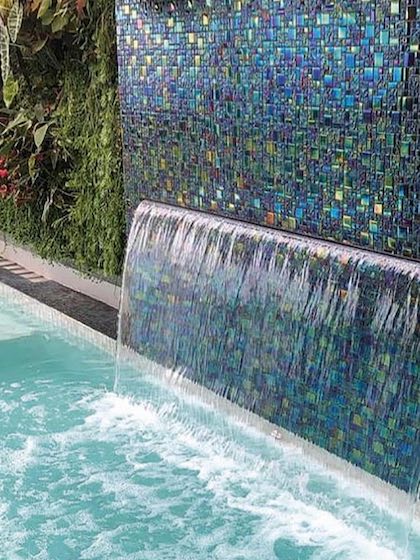
Iridescent glass tiles are manufactured with a specialized reflective coating that interacts with light and water to produce subtle color variations. As sunlight shifts throughout the day and water moves across the surface, the tiles appear to change tone, creating a dynamic, almost fluid visual effect.
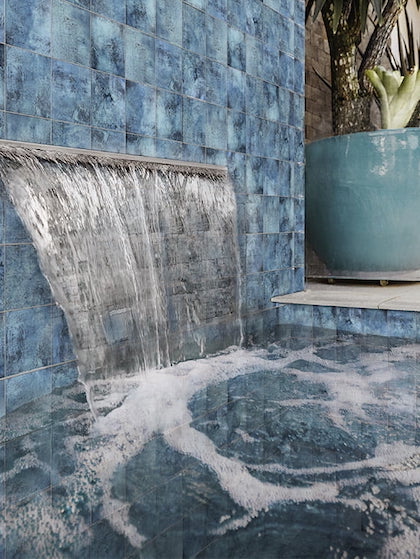
Unlike ceramic or porcelain tiles, glass tiles are non-porous, meaning they do not absorb moisture. This characteristic makes them especially effective in wet environments such as pools, spas, and water features—provided they are specifically rated for submerged or waterline use.
Why Iridescent Glass Tiles Are Ideal for Pool Waterlines
Enhancing the Look of Pool Water
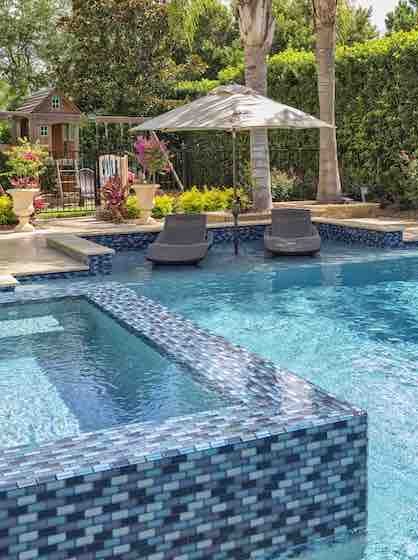
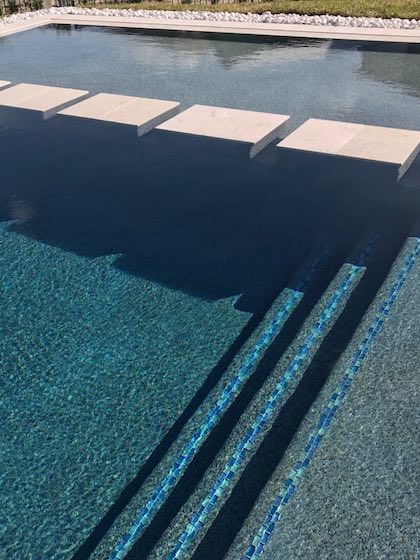
The waterline is where the pool visually meets its surroundings. Iridescent glass tiles enhance this transition by reflecting natural light and amplifying the color of the water. Blue, aqua, and opalescent finishes create a clean, luminous appearance, while pearl and metallic tones add a more contemporary edge.
Luxury Impact Without Full Renovation
One of the biggest advantages of using iridescent tiles at the waterline is efficiency. Rather than resurfacing the entire pool, a waterline upgrade delivers immediate visual transformation at a fraction of the cost. This makes it an attractive option for remodels, refresh projects, and value-focused upgrades.
Long-Term Durability in Pool Conditions
High-quality pool-rated glass tiles are engineered to withstand constant exposure to water, UV rays, and pool chemicals. When installed correctly, they maintain their finish and structural integrity over time, making them a practical as well as aesthetic investment.
Also, Guide On Choosing the Right Waterline Tile for Your Pool
Design Strategies for Using Iridescent Glass Pool Waterline Tiles
Selecting the Right Color and Finish
Color choice directly affects how the pool is perceived:
- Blue and Teal Tones: Enhance clarity and give water a vibrant, inviting appearance
- Pearl and Opalescent Finishes: Deliver subtle elegance and soft light diffusion
- Silver and Metallic Shades: Ideal for modern, architectural pool designs
Choosing a color that complements pool plaster, coping, and surrounding hardscape ensures a cohesive, intentional design.
Tile Size, Shape, and Layout
Mosaic tiles are the most popular option for pool waterlines due to their flexibility around curves and consistent alignment. Smaller formats also create smoother transitions and minimize visible grout lines.
Rectangular or linear tiles can be used for contemporary pools but require precise planning and professional installation to maintain symmetry and alignment.
Coordinating with Coping and Decking Materials
Iridescent tiles perform best when balanced against neutral or natural materials such as stone coping, porcelain pavers, or concrete decking. This contrast allows the reflective surface to stand out without overpowering the overall design.
Installation Best Practices for Iridescent Glass Pool Tiles
Choose Tiles Specifically Rated for Pools
Not all glass tiles are suitable for waterline or submerged applications. Pool-rated tiles are designed to handle expansion, chemical exposure, and constant moisture. Using the wrong product can result in cracking, discoloration, or tile failure.
Use Proper Adhesives and Grout
- Thinset: A premium white thinset approved for glass tiles and submerged environments is essential
- Grout: Epoxy grout is strongly recommended for pool waterlines due to its resistance to staining, moisture, and chemical damage
Grout color should complement the tile and enhance the iridescent finish rather than distract from it.
Account for Expansion and Movement
Glass expands differently than other materials. Proper spacing, expansion joints, and professional installation techniques are critical to prevent long-term structural issues. For this reason, glass pool tile installation should always be handled by experienced professionals.
Top 15 Contemporary Swimming Pool Tile Ideas
Maintenance and Care for Long-Lasting Performance
Safe Cleaning Practices
Use non-abrasive cleaners and soft brushes to maintain the tile surface. Avoid harsh chemicals or abrasive tools that can damage the iridescent coating.
Preventing Calcium and Mineral Buildup
The waterline is the most vulnerable area for scale and mineral deposits. Maintaining balanced pool chemistry and performing routine cleaning helps preserve the tile’s reflective finish.
Maintaining the Iridescent Effect
With proper care, iridescent glass tiles retain their shine and color depth for many years. Consistent maintenance ensures the waterline remains a focal point rather than a problem area.
Common Mistakes to Avoid
-
Installing non-pool-rated glass tiles
-
Using incorrect thinset or grout
-
Ignoring expansion requirements
-
Selecting overly bold colors without design balance
-
Skipping professional installation
Avoiding these mistakes protects both the aesthetic and structural integrity of the pool.
Are Iridescent Glass Tiles Worth the Investment?
From a cost-to-value perspective, iridescent glass tiles deliver strong returns. They elevate pool design, enhance property appeal, and provide long-term durability when installed correctly. For homeowners, they offer a visually striking upgrade. For builders and designers, they add a premium differentiator that clients notice immediately.
Final Thoughts
Iridescent glass tiles transform pool waterlines into intentional design features rather than functional borders. By combining thoughtful design, pool-rated materials, and proper installation, you can achieve a waterline that delivers lasting beauty, performance, and luxury appeal.